The Salt-water Path
Sea Fever in Flanders

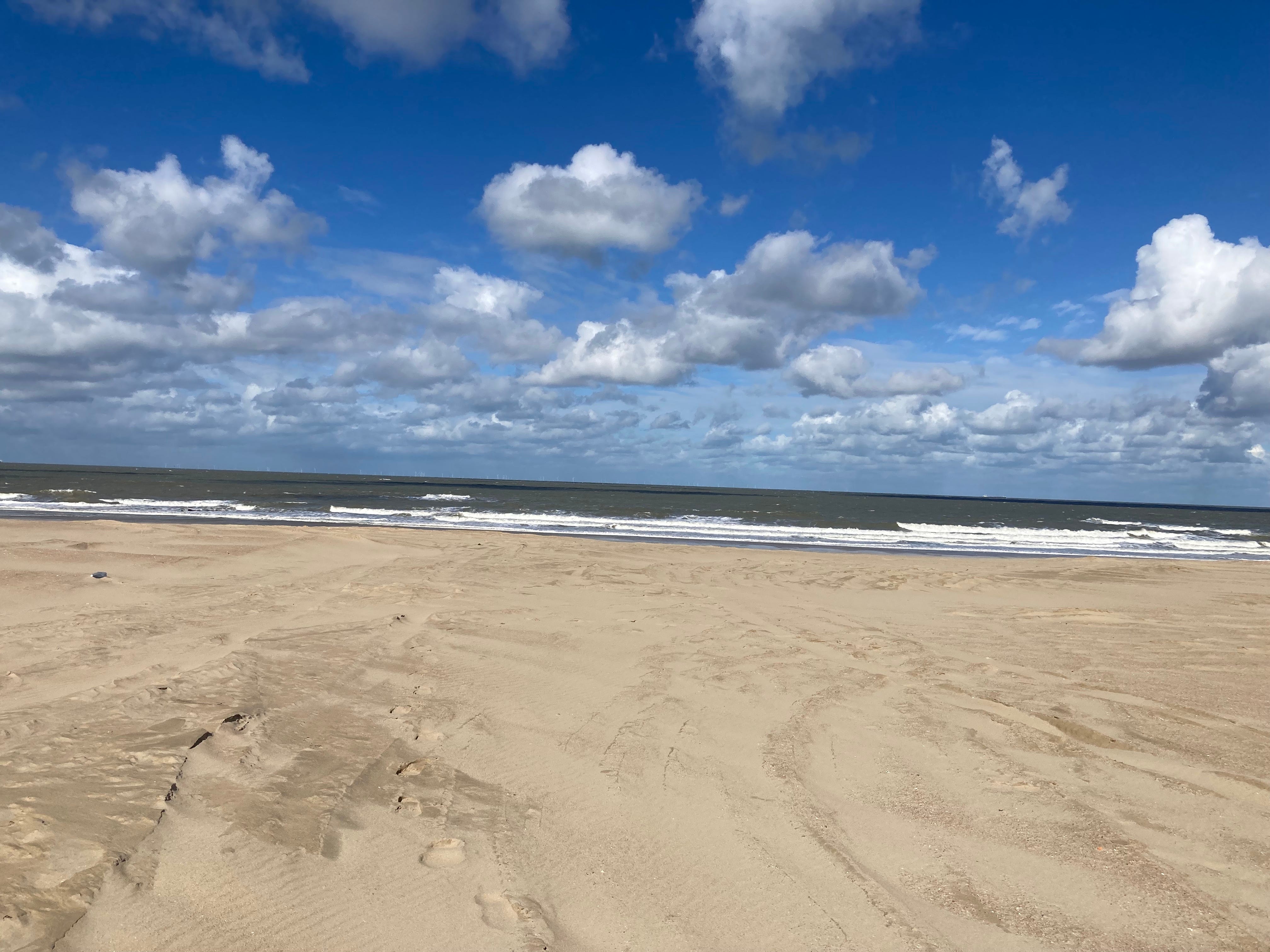
You could say that the Belgian coast was where I began a life-long affair with the country’s beers. The port of Ostend was my first landfall on the European mainland when I came on holiday with my mother and younger brother, back in the mid-70s. It was one of those budget trips, where we stayed in Ostend and every day went on a coach to the likes of Amsterdam (‘rubbish’ according to my diary, ‘full of hippies’), Brussels (‘fantastic’) and Bruges (‘cheap’ as in unimpressed rather than anything financial). At the age of 15 I also persuaded my mother that it was perfectly legal for me to have a glass of Stella Artois in the hotel bar, which she reluctantly agreed to, though she put her foot down when my 12-year-old brother said it applied to him as well.
A couple of years or so ago I was back in Ostend and over two days I used the coastal tram to explore the sea-facing areas both north and south of the city, popping off in various resorts. I was in search of the places of beer on this often windswept coast, and the tracked mobility of the tram, its ability to be forever moving, was my guiding star. There was no fixed point on the coast, it seemed, when I was on the tram, it was a continuous journey, like continuous fermentation, in that ideas and visions are fermenting in your mind, thoughts bubbling away, ideas swerving from one place to another. You become a watcher on a microscopic world on the tram, seeing people hopping on and off, children on their way home from school, what you think is an enthusiast for the tram (like you are becoming), a birder who disembarked near a wild-life sanctuary and the history buff eager to look at the remains of part of the Nazis’ Atlantic Wall just outside Ostend at Domain Raversijde.
Travelling northeast towards the Dutch border, where the tram reached its terminus at Knokke, an affluent resort, which very much merited the description I had been given in a Brussels bar the previous night by a man on the next table. ‘When you get to Knokke-Heist at the eastern end,’ he said, ‘it’s very bling bling and you will see Porsches there.’ He had a point. The main street of Knokke was a uniformity of shops dealing with jewellery, clothes, perfume and interior decorations, though I spotted no Porsches.
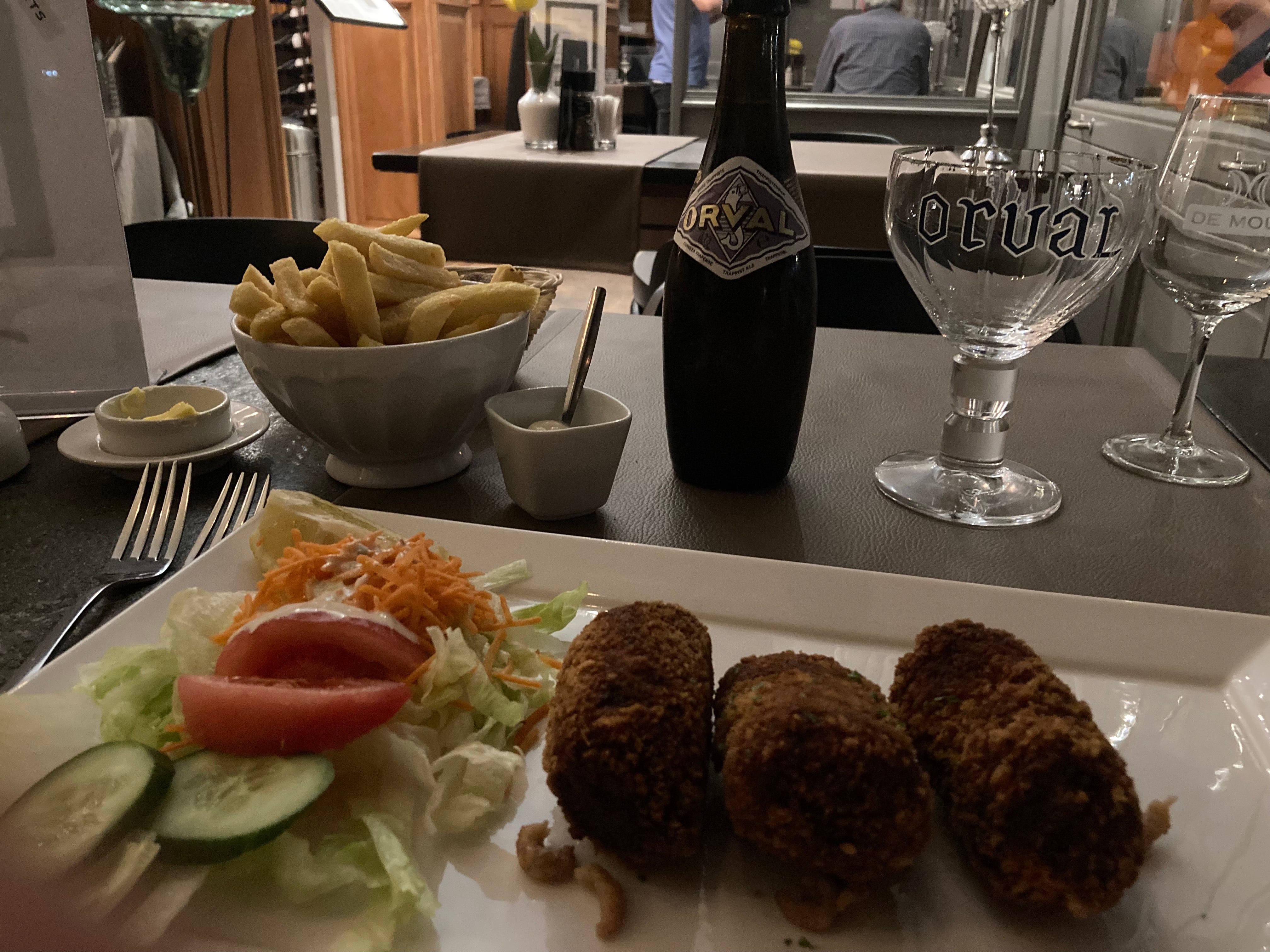
I have always felt that a distinctive area in the northern beer lands demands its own beer culture, in the same way that the church towers and castles of Bavaria magic up glasses of Helles and Festbier, or back in the UK the seaside location of Adnams in Suffolk tempts the thirsty. So with this is mind, in search of beer culture, I wandered into a traditional looking bar called Estaminet and ordered a glass of the classic Trappist beer Orval. It wasn’t brewed by the coast or even in Flanders, its home was Wallonia, but it was a beer that suited me at that moment as I sat beneath a canopy on the outside watching the world go by. This wasn’t a place of beer, but it was a start.
Memory often plays tricks, a blurred sleight of hand, the grand magician of time at work, as something you think happened, of which you are absolutely sure of the significant details, is then exposed as a jerrybuilt structure of false remembrance on reading a diary entry that tells you the truth. For instance, take the rediscovery of an entry from April 1989 in which I wrote that I wasn’t sure where my then girlfriend and I were going with our relationship, even though we were planning to marry. I hadn’t read it since then, so when she finished with me a couple of months later I always thought of it as a shock, a surprise ending to what was a perfect relationship. Reading that long-forgotten memo to oneself recently I now know this was not true. I’d also forgotten that my mother said she wouldn’t be coming to the wedding if my father was and then he said he wouldn’t go so my mother could. The dramas of an impending marriage, which when we split up had probably gone off the boil though I had stopped writing in my diary by then.
So when I recall my visit to the Flemish coast in search of its beer culture, I ask myself if what I write will be an accurate version of the two days I spent there or will it be what I would like it to have been? And did I find anything? The conundrum of the Flemish coast is that its beer culture is sparse and very weak in its grip on the imagination, with three breweries and several brewing firms. However, it is a gorgeous place to visit, it has a romance about it, especially out of the holiday season, though I suspect that during the summer it is a ramshackle parade of riotous behaviour and any semblance of beer culture is thrown out of the window. I will be going back on the salt-water path soon and my explorations will continue.
Thanks for this nice piece on one of my favourite places in the world. True, the beer culture is not as strong as elsewhere in Belgium, but the coastal tram and unique atmosphere make up for it
Ah, the 'ostend orgy', I wonder if this is still a rite of passage for young drinkers from the east of England? I fear they are all off on long haul voyages of Instagram -able personal enlightenment.